
What Common Household Cleaners Are Toxic to My Cat?
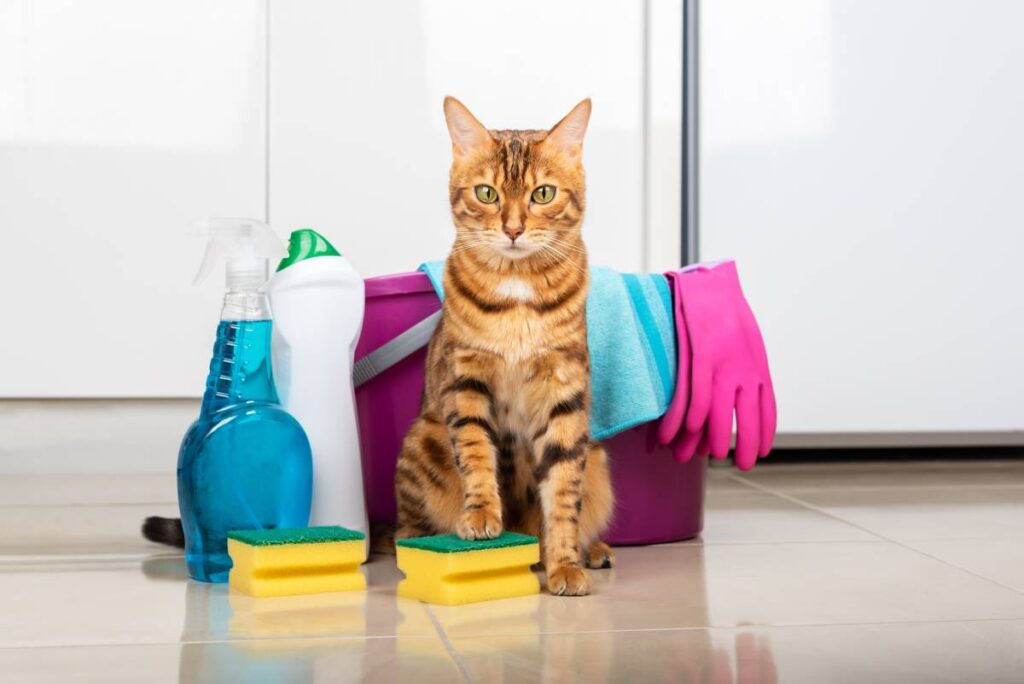
Spring cleaning season is here, and for many, this means stocking up on disinfectants, scrubs, and sprays. But if you share your home with a cat, it’s important to realize that many common household cleaners contain ingredients that are hazardous for your furry companion. Our team at All About Cats Veterinary Hospital has put together tips and guidance to help keep your feline safe.
Why Are Cats More Vulnerable Than Other Pets to Household Toxins?
Cats have a limited ability to process certain toxins due to differences in liver enzyme activity. This means chemicals that a dog may process without serious harm can cause significant damage to a cat. Cats also spend a good amount of their time grooming themselves, so simply walking across a freshly mopped floor and licking their paw can lead to accidental ingestion, with serious health consequences.
What Household Cleaning Products Pose the Greatest Risk?
Here are some of the household cleaners that are highly toxic to cats:
- Bleach and Chlorine-Based Disinfectants: Bleach is highly irritating to a cat’s respiratory tract, skin, and digestive system. Even diluted bleach can cause drooling, vomiting, and burns to the mouth and throat.
- Phenol-Based Cleaners: Products like Lysol and Pine-Sol contain phenols, which are particularly toxic to cats. Even the smallest exposure can lead to serious complications, including liver failure.
- Ammonia-Based Cleaners: Glass cleaners and some all-purpose sprays contain ammonia, which irritates the eyes, nose, and lungs. Cats are drawn to ammonia-based products because their smell mimics that of urine, increasing the risk of accidental ingestion.
- Formaldehyde: Found in some floor cleaners and disinfectants, formaldehyde is a known carcinogen. It can also cause serious respiratory and gastrointestinal issues in cats.
- Essential Oil-Based Cleaners: Natural doesn’t always mean safe. Tea tree oil, eucalyptus, citrus, and pine essential oils can all be toxic to cats, even in the tiniest amounts.
What Are Signs of Toxin Exposure in Cats?
The following are warning signs of toxin exposure that may require emergency care:
- Drooling, foaming at the mouth, or pawing at the face
- Vomiting or loss of appetite
- Difficulty breathing or coughing
- Lethargy, stumbling, or tremors
- Redness or irritation around the eyes, mouth, or skin
Never wait to see if symptoms improve on their own. When in doubt, call All About Cats Veterinary Hospital or the Pet Poison Helpline for guidance. The sooner you seek care, the better the outcomes for your furry companion.
What Are Safer Cleaning Practices for Households with Cats?
Prevention is always better than dealing with cat emergencies. The following practices go a long way toward keeping your cat safe:
- Keep cats out of rooms while cleaning and until surfaces are fully dry
- Rinse cleaned surfaces with water before allowing your cat back in the area
- Store all cleaning products in secure cabinets that your cat can’t access
- Open windows for ventilation when using any chemical products
- Look for pet-safe cleaning products and check labels carefully before purchasing
Emergency Feline Care Near Me in Kirkland, WA
If you suspect that your furry feline companion has been exposed to a toxic substance, don’t wait. Contact All About Cats Veterinary Hospital at 425-636-8201 or the Pet Poison Helpline at (855) 764-7661 right away. Please note that the Pet Poison Helpline will charge a fee for a phone consultation. And if you have questions about keeping your home safe for your feline companion, we are always happy to help. You can count on our team for exceptional, compassionate care because, after all, we are all about cats!