Is Your Cat Not Drinking Enough Water? Simple Ways to Prevent Dehydration
Cats are notoriously poor drinkers, often resulting in dehydration and serious health consequences. Kidney disease, urinary tract infections, and bladder problems are often linked to chronic low water intake, and they are among the most common conditions we see here at All About Cats Veterinary Hospital. The good news? There are simple things you can do to help.
The Importance of Hydration in Cats
Water plays a role in nearly every function in your feline friend’s body. It supports kidney function, aids digestion, regulates body temperature, and helps flush waste products from the system. When cats don’t get enough water, the effects can quickly add up.
As the summer months heat up, your cat’s risk of dehydration increases. Even indoor cats may drink less water than their bodies require during warmer weather. This is especially true for cats with chronic health conditions or those who mainly eat dry food. Senior cats are also susceptible to dehydration due to age-related changes in their kidneys, so they may need a little extra help staying hydrated.
How Can You Tell If Your Cat Is Dehydrated
Mild dehydration can be easy to miss. Watch for the following warning signs:
- Dry, Tacky Gums: Healthy gums feel moist and slick. Dehydrated gums feel sticky or dry to the touch.
- Loss of Skin Elasticity: When you gently pinch the skin between your cat’s shoulder blades, it should snap back instantly. Dehydrated skin loses its elasticity and stays “tented” in place.
- Lethargy and Weakness: You may notice a sudden drop in energy, a lack of interest in play, or a reluctance to jump onto favorite surfaces.
- Poor Appetite: Dehydrated cats often refuse to eat, which accelerates their decline.
- Sunken, Dull Eyes: The eyes may lose their focus, appear set back into the sockets, or look dry and glassy.
- A Dull, Unkempt Coat: Dehydration dries out the skin, making the fur look scruffy, spiky, or lacking its luster.
- Litter Box Changes: Look for constipation, hard and dry stools, less frequent urination, or highly concentrated, dark urine.
- Panting or Rapid Breathing: Unlike dogs, cats rarely pant to cool down. If your cat is panting or breathing heavily, it may signal a serious issue, such as heatstroke or severe dehydration.
If your cat shows any of these signs, make sure to contact us. Dehydration can cause serious complications quickly, particularly in senior cats or those with underlying health conditions.
Simple Ways to Encourage Your Picky Cat to Drink More Water
The following are easy, practical things you can do to boost your cat’s water intake:
- Keep Water Fresh and Bowls Clean: Cats are particular. Stale water or a dirty bowl is a quick way to lose their interest. Rinse and refill daily, and wash the bowl regularly.
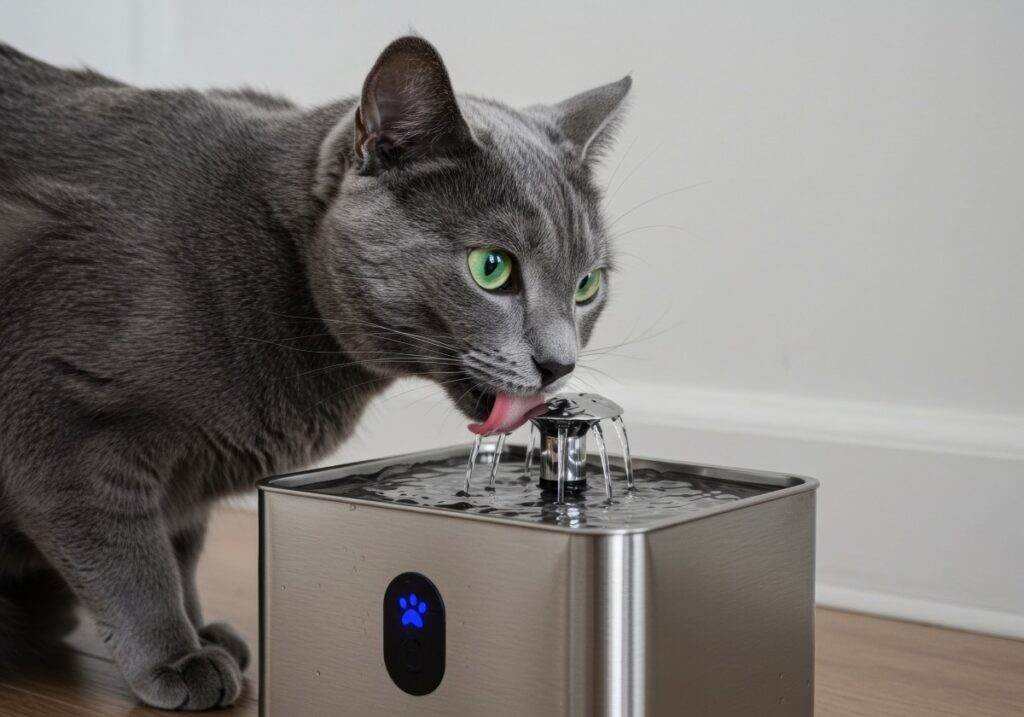
- Try a Pet Fountain: Many cats prefer moving water. A recirculating fountain keeps water fresh and oxygenated, which can be much more appealing than a still bowl.
- Offer Multiple Water Stations: Cats are more likely to drink when water is convenient. Put bowls in several locations, including away from the food bowl, since cats instinctively prefer their water source to be separate from where they eat.
- Choose the Right Water Bowl: Some cats are not fans of deep or narrow bowls because their whiskers touch the sides. A wide, shallow dish can make a surprising difference.
- Switch to or Add Wet Food: Canned food is roughly 70-80% water. Even one wet meal a day can significantly increase your cat’s overall water intake.
- Add a Splash of Low-Sodium Broth: A small amount of unsalted chicken or fish broth in your cat’s water bowl can make it far more enticing. Just make sure there are no added seasonings or onions.
Comprehensive Cat Care Near Me in Kirkland, WA
Keeping your cat well-hydrated is one of the most important things you can do for their long-term health and well-being. If you struggle to get your feline friend to drink water or if you have questions or concerns, our team at All About Cats Veterinary Hospital is always here to help.
Contact us at 425-636-8201 to schedule an appointment today. You can count on us for exceptional, compassionate care because, after all, we are all about cats!